How to Get Your Google Ads Seen in AI Overviews: 14 Best Practices for Clothing Brands
A shopper navigates to Google Search and types “what should I wear to a beach wedding in july”. An AI Overview suggests fabrics and outfits, and somewhere in there, there’s an ad. And if this ad is from your brand, you’ve just acquired a customer that would’ve never searched for your brand or even the word “dress”.
That is a powerful insight to have before tweaking any campaign settings. This guide covers fourteen practices for clothing brands to get your Google ads seen in AI Overviews.
We’ve also ordered them the way you’d actually set up a campaign: campaign type first, product data next, then everything that builds on it, like images, pricing, and creative, and so on.
There’s a caveat though, the order will work if the campaign is eligible for AI Overview placements in the first place. Ergo, that’s where we start.
Campaign Types That Qualify for AI Overviews
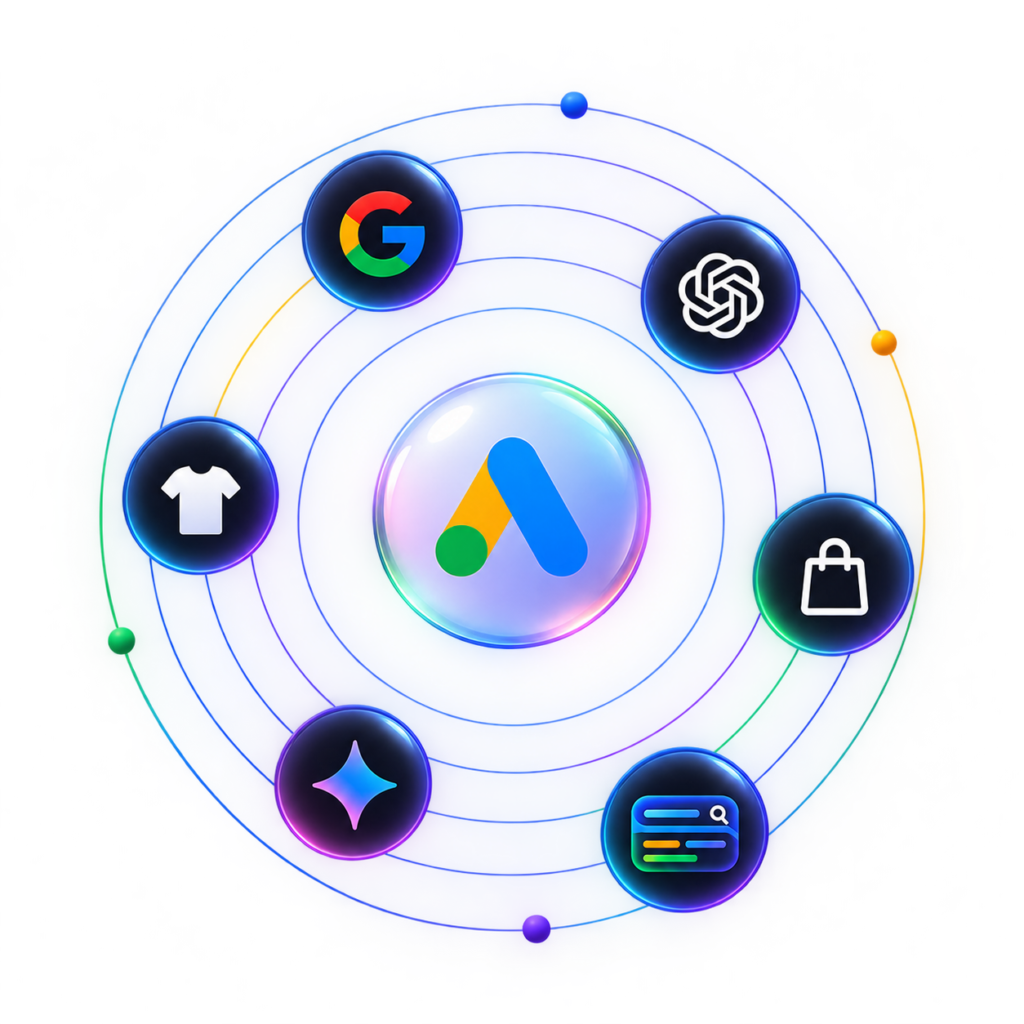
Ads in AI Overviews run only through AI-powered targeting, and therefore, a Search campaign limited to exact and phrase match falls outside that scope. Below is what does qualify, along with what each option requires.
Broad Match on Search
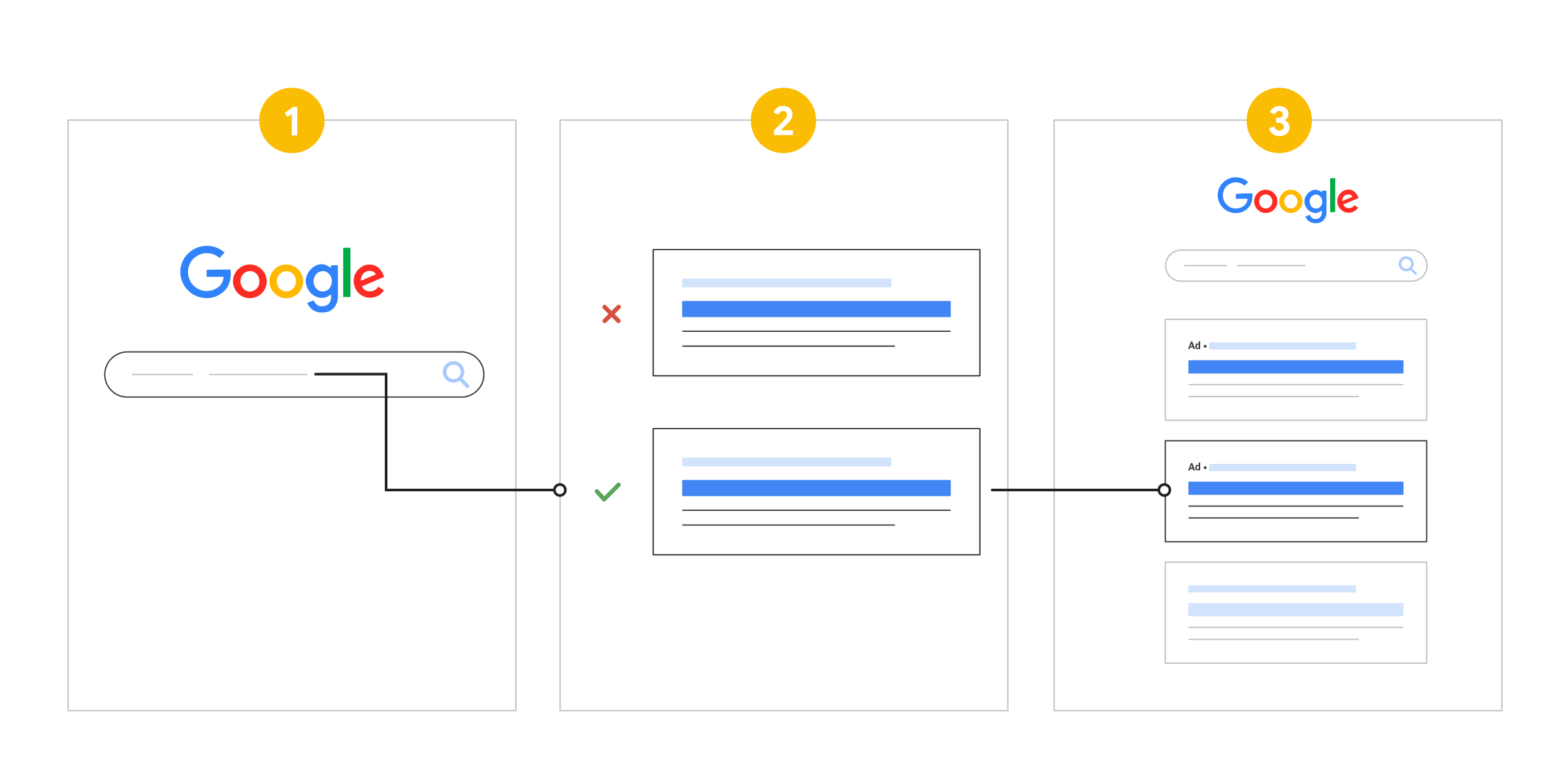
Broad match targets meaning not exact words which is good since AI Overviews are generally long conversational searches. However, Google suggests using it with Smart Bidding because without automated bidding, broad matches can get you traffic that isn’t relevant to what your company sells.
AI Max for Search
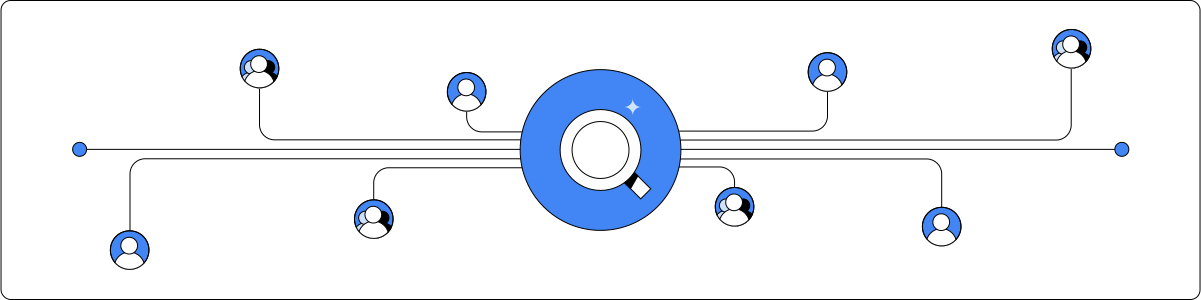
AI Max treats existing keywords as a starting point and expands from them through search term matching and asset optimization. Turning it on also introduces two related features: text customization, where Google generates ad copy, and final URL expansion, where Google can direct traffic to a page other than the one specified. Both appear in more detail later in this guide.
Performance Max
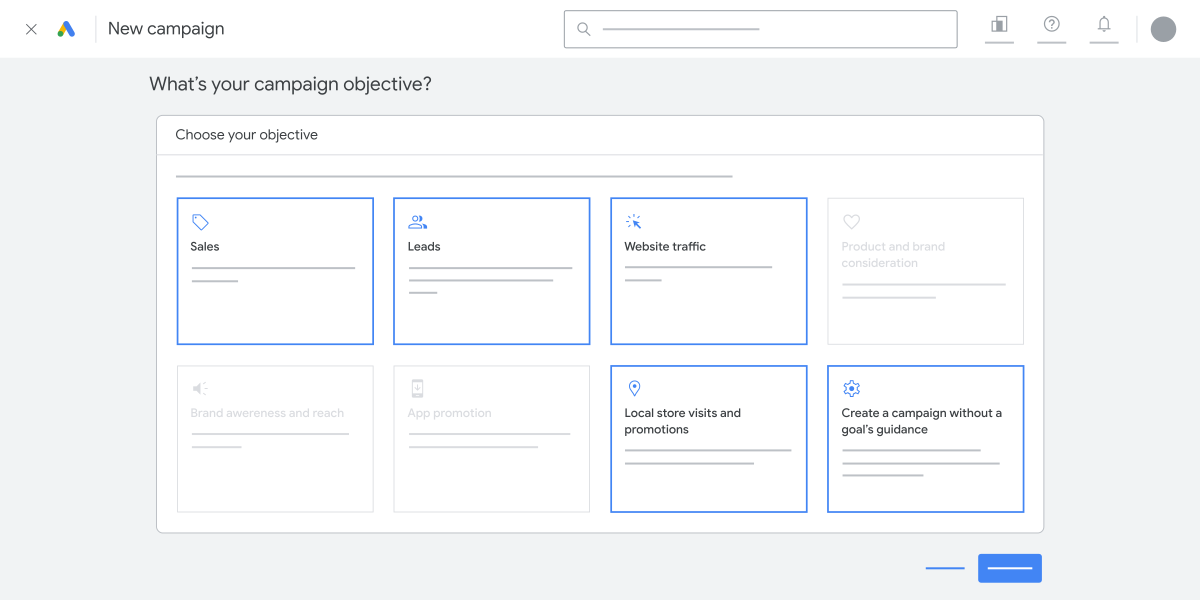
Performance Max needs no keywords. It uses your product feed, creative assets, and landing page content to determine when an ad should appear. Opting into final URL expansion works the same way here as in AI Max: Google places more emphasis on page content when judging relevance, which widens the pool of eligible queries.
Shopping Campaigns
Shopping campaigns also skip keywords and run entirely on the Merchant Center feed. With no ad copy in play, the feed alone decides whether a product appears for a given search. Title structure, images, and attribute completeness, all addressed in the practices below, become the deciding factors.
Dynamic Search Ads
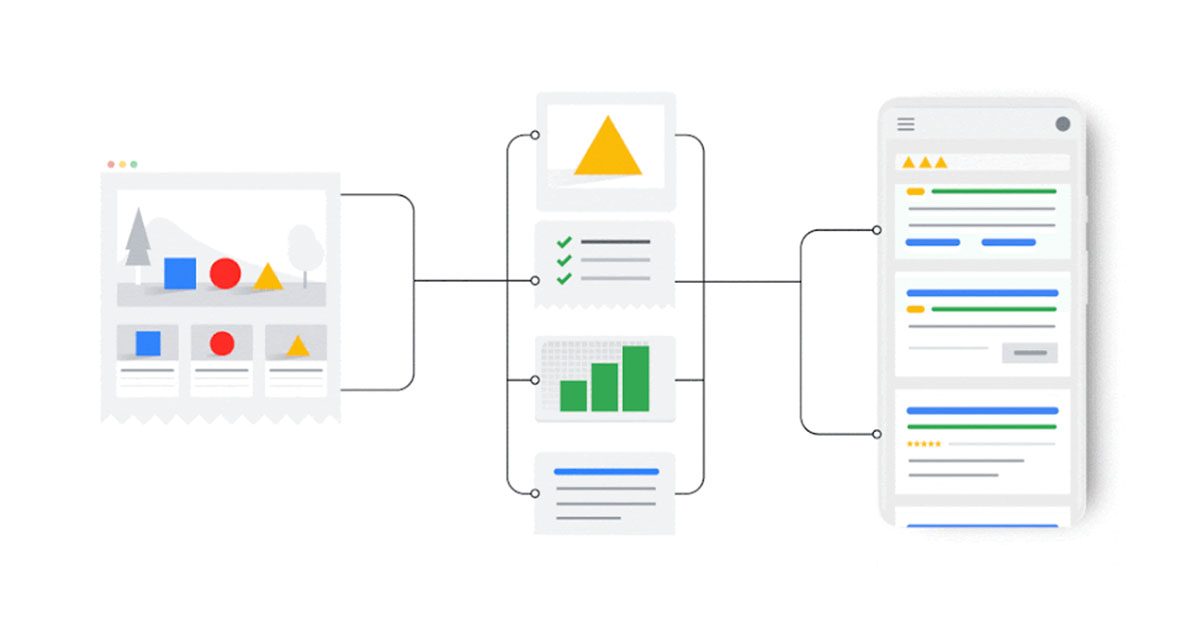
Dynamic Search Ads match ads to searches using website content and not keywords or a feed. For a clothing brand, category and product pages need to state clearly what the store sells, because they take over the function keywords would normally serve.
14 Best Practices to Make Google Ads for Clothing Stores Appear in AI Overviews
Most of these practices work for other e-commerce categories too. They are not exclusive to Google ads for clothing stores. In fact, we’ve applied the same feed rules, image standards, and Performance Max controls to F&B brands and footwear lines with equally good results.
But apparel needs particular care and attention because in this niche, it’s quite common for a single product listing to multiply into a dozen feed entries once you factor in its variants. We’ll talk more about it in practice # 5.
1. Run a campaign type that qualifies.
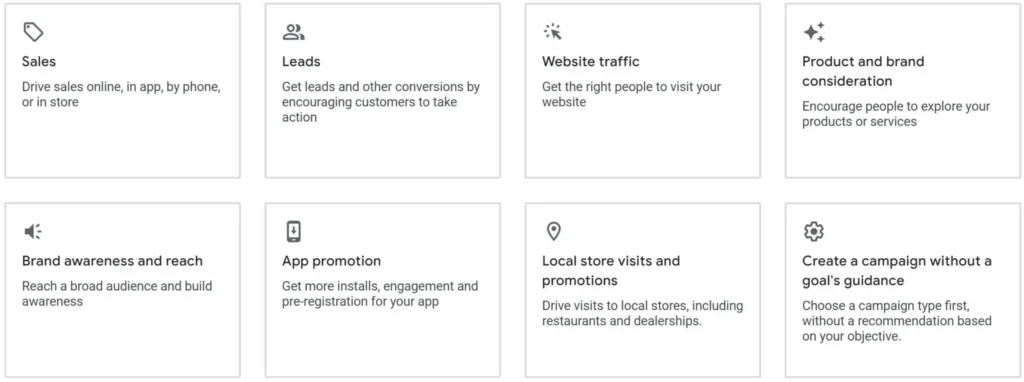
Choose at least one option from the list above, since none of these work without AI-powered targeting behind them. For most clothing sellers, Shopping and Performance Max offer the fastest path, as both already run on the Merchant Center feed most stores maintain.
An additional option launched in April 2026: AI Max for Shopping, a one-click upgrade that turns Merchant Center feeds into dynamic Shopping ads built for conversational queries. Rollout has varied by account, so check whether it appears in yours.
2. Fill in every required apparel attribute.
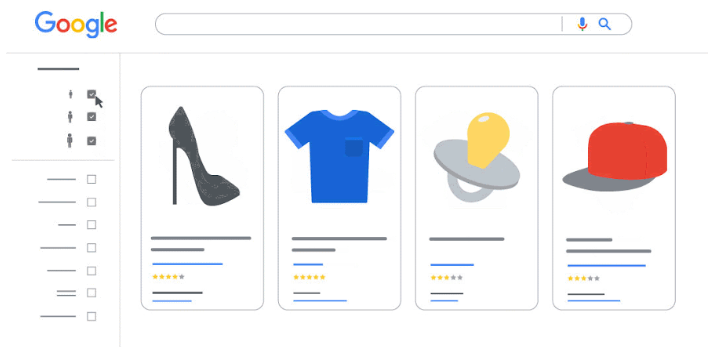
Apparel listings need gender, age group, and color. Footwear needs those three plus size. Omitting any of them lowers data quality, which can weaken performance in search results. Gender specifically is mandatory for all Apparel & Accessories products sold in Brazil, France, Germany, Japan, the UK, and the US.
3. Write titles that lead with the key details.
Google wants the most important details packed into the first 70 characters, following the pattern Brand + Product Type + Other Important Attributes. Its guidance also advises to add:
- Size type, such as petite, plus size, or maternity
- Gender or age group, when the image alone does not make it obvious
- Color, size, material, and pattern
- “Personalized” or “monogrammed”, for customizable items
Leading with a brand name pays off only when shoppers actually search for that name. Google Trends can confirm this. A newer or smaller label often performs better leading with the product type. A placeholder example: “[Brand] Women’s Sleeveless Cotton Dress, Sage Green, Petite 4P”.
4. Use one color name everywhere.
Whatever color name is on the landing page should also appear in the feed. If the page describes a shade as “ocean”, the title, description, and color attribute should do too. Products that have more than one color should not state multicolor, and instead list up to three specific colors used in the product, separated by a slash.
5. Submit each size and color as its own item.
In a Merchant Center feed, each and every variant of a product’s size, color, material, and pattern has to be submitted as a separate listing. In other words, a dress that comes in three sizes and two colors must have six feed entries, each with its own ID, all linked under one item group ID to ensure that Google understands that they’re the same product.
There are two more rules here:
- The image link needs to correspond to the specific variant, and the ad should land shoppers on a page with that variant already selected.
- A matching top and trouser, or two visually similar styles, should never share one item group ID.
6. Add size type, size system, and a detailed product type.
Size type and size system are optional fields, but they will give your shoppers a better idea of the fit before they click on an item. Google also asks for the most granular product type available, like Apparel & Accessories > Clothing > Outerwear > Coats & Jackets > Denim Jackets, as opposed to leaving it at “jackets”.
7. Use high-quality feed images.
Google has set explicit minimum requirements: at least 512 x 512 pixels, ideally 1024 or more, with a width of 1500 pixels wherever feasible. For vertical and horizontal images, its preferred aspect ratios are 9:11 and 4:3, respectively. It also advises removal of resizing parameters from image URLs. In addition, Google expects:
- Clothing photographed on models, with heads and feet left uncropped. Google’s lifestyle image link attribute exists for this purpose.
- Shoes, bags, and accessories shown alone in the main image, then on a model in additional shots.
- Solid white or transparent backgrounds.
- Extra images covering different angles and close-up detail.
Furthermore, Google asks retailers to provide sufficient images and video, in a consistent quality and diverse assortment, to populate its enhanced ad formats. Its free Product Studio software can generate images and use AI to apply seasonal themes. Don’t forget to compare all the generated images to the garment itself, because a color that looks different on the screen than in real life is an easy invitation to product returns.
8. Keep price, stock, and shipping details up-to-date.
Your clothing inventory shifts by the hour, and stock too doesn’t run out all at once.
If your feed lags behind what’s actually in stock, Google flags that gap as a common cause of disapprovals. Automated feed delivery with intraday updates, or the Merchant API, is what will keep your items’ price and availability accurate enough to avoid that. Because each size and color counts as its own item, you get a real benefit from this: you can track exactly which variants are still in stock and which aren’t.
Check the Needs attention tab in Merchant Center on a regular schedule to catch items Google has flagged. Pair that with a periodic look at your own descriptions, pricing, shipping, and returns, for the reason that a wrong price or an outdated return window won’t always trigger a flag on its own.
9. Align schema markup with your product pages.
Google recommends schema markup as one way to keep the price and availability on your website accurate. But it will only help if the markup, the price shown on the page, and your feed all match. Get your SEO team involved here, since the product pages, the feed, and the markup all pull up information from the same underlying data.
Just a quick note: consider linking out to outside sources on a landing page to build trust. Google hasn’t confirmed this affects ad placement, which means that we won’t judge you if you treat it as optional. For clothing, it works best where a page makes a claim an outside source can back up, such as a fabric certification.
10. Plan seasonal drops and sales ahead of time.
In fashion & apparel, there are different collections for every season, and Google’s timelines for this are specific. New product data should go up 3 to 5 business days before a launch or sale, and no earlier than 30 days out.
Feeds can take up to 72 hours to get crawled after an initial review, and promotions usually clear review within 12 hours, longer during peak periods. Make sure to check your landing pages before and during major events because it’s common for an unstable page to lead to product disapprovals.
Two feed attributes support this planning:
- Sale price: sale_price paired with sale_price_effective_date communicates value during major sales.
- Custom labels: custom_label_0 through custom_label_4 group products for targeted promotions, particularly useful within Performance Max. A label such as “spring-collection” or “clearance” allows those products to be managed as a set.
Google’s holiday guidance also recommends uncapped budgets during seasonal spikes to prevent demand from outpacing spend.
11. Set up Performance Max controls for a clothing catalog
- Match the product to the video: Auto-generated videos can pull in a different product than the one on the landing page. Product filters keep an asset group tied to the correct page, and they matter most in a catalog full of similar styles.
- Add search themes: Up to 50 per asset group are allowed, and exclusions and negative keywords still apply on top of them. Search themes carry the same priority as phrase and broad match keywords. A phrase such as “linen shirts for summer” or “modest wedding guest dress” describes the shopper’s actual need.
- Add audience signals: This is the term Google uses for the audiences attached to an asset group. Customer lists and past purchasers give the system a starting reference point.
- Exclude a brand’s own terms: Brand exclusions catch misspellings, variants, and subsidiary brand names automatically. Negative keywords work best reserved for genuine brand safety concerns or clearly irrelevant terms. Account-level negative keywords apply across every campaign, which is where Google recommends handling brand suitability.
- Understand how Search overlaps: An exact match keyword in a Search campaign takes priority over Performance Max whenever a query matches it.
12. Supply a full set of varied creative assets.
Performance Max and AI Max can assemble ads using any assets provided by the brand. The more variations are provided, the better they allow Google to optimize.
A good rule of thumb is to use landscape, square, and portrait images, as well as horizontal, square, and vertical videos, so that the best option is selected for each ad placement. Bear in mind that Google may crop or sometimes even distort a horizontal video to fit a square or vertical YouTube Instream or Shorts ad if none of them are available. Upload a separate vertical cut of the video to avoid unwanted cropping or aspect ratio distortion.
13. Write conversational ad copy that answers shopper questions.
Google matches ads in AI Overviews to its read on shopper intent, drawing on both the query and the content of the AI Overview itself. Replace the conventional “Buy now” with more personalized phrasing like “Find your fit” or “See what works for [occasion]”or simply “Browse our [season] collection” to speak to the shopper’s needs directly.
As they cannot see or touch a clothing article, online shoppers almost always have queries about a dress’ fit, fabric, occasion, care, delivery, and returns. Speaking from experience, headlines and descriptions built around those questions tend to perform well, provided every claim is true to the product. Other than that, ensure that all headlines and descriptions each communicate something different. Ten versions of the same sentence give Google nothing new to compare.
While you are at it, make sure the delivery and return terms you mention in an ad match your store’s actual policy.
Google’s new AI Brief tool allows advertisers to direct AI Max in plain language, covering messaging, matching, and audience guidelines. Google’s own example is a rule like “never mention prices”. If your brand has rules like never referencing a competitor by name, always calling out free shipping, avoiding sale or discount language in ad copy, or sticking to certain size and fit terminology, enter them into AI Brief now.
14. Decide on final URL expansion and check what it produces.
Final URL expansion allows Google AI to select the best landing page on a site for each search. It opens up a wider set of destination pages for a large catalog, though it also transfers page selection to Google, which calls for an ongoing review step.
Google’s AI Max documentation flags three details worth knowing:
- Final URL expansion requires text customization to be turned on, so ad copy matches whatever page it lands on.
- Text customization was previously called automatically created assets.
- Once final URL expansion is active, pinned responsive search ad assets stop being honored.
Every page Google selects should display the size and color promised in the ad, an accurate price, and clear shipping and return terms. Reading through the generated ad text on a consistent schedule matters too, since part of that copy now comes from Google rather than the brand itself.
Increase Your Google Ads ROI
The SquarePeg has helped clothing brands set up and manage Google Ads using the practices covered above, from fixing apparel-specific feed attributes to building Performance Max campaigns around real audience data.
A little disclaimer is in order: we don’t run a separate strategy just to get you into AI Overviews. If your feed and campaigns already follow the practices mentioned above, appearing in AI Overviews just happens on its own. For the most part, these are the same tasks that drive your regular Search and Shopping performance.
Want your Google Ads set up the right way from the start?


Struggling to grow?
We will do a quick audit of your brand to help you understand some key issues.